
Ever notice how your best ideas come in the shower, or right as you're drifting off to sleep? That's not coincidence — it's your brain entering a Theta state.
Theta waves are one of the most fascinating aspects of brain science, and learning to access them intentionally can transform your mental performance. In this guide, we'll explore what Theta waves are and how to harness them for better focus and clarity.
What Are Theta Waves?
Your brain produces different types of electrical activity depending on your mental state. These are measured in cycles per second (Hz) and categorized into five main types:
- Gamma (30-100 Hz) — High-level information processing
- Beta (13-30 Hz) — Active thinking, problem-solving
- Alpha (8-13 Hz) — Relaxed awareness, light meditation
- Theta (4-8 Hz) — Deep relaxation, creativity, insight
- Delta (0.5-4 Hz) — Deep sleep, healing
Theta waves occur in that sweet spot between waking and sleeping. It's when your conscious mind quiets down and your subconscious becomes more accessible.
The Science Behind Theta and Focus
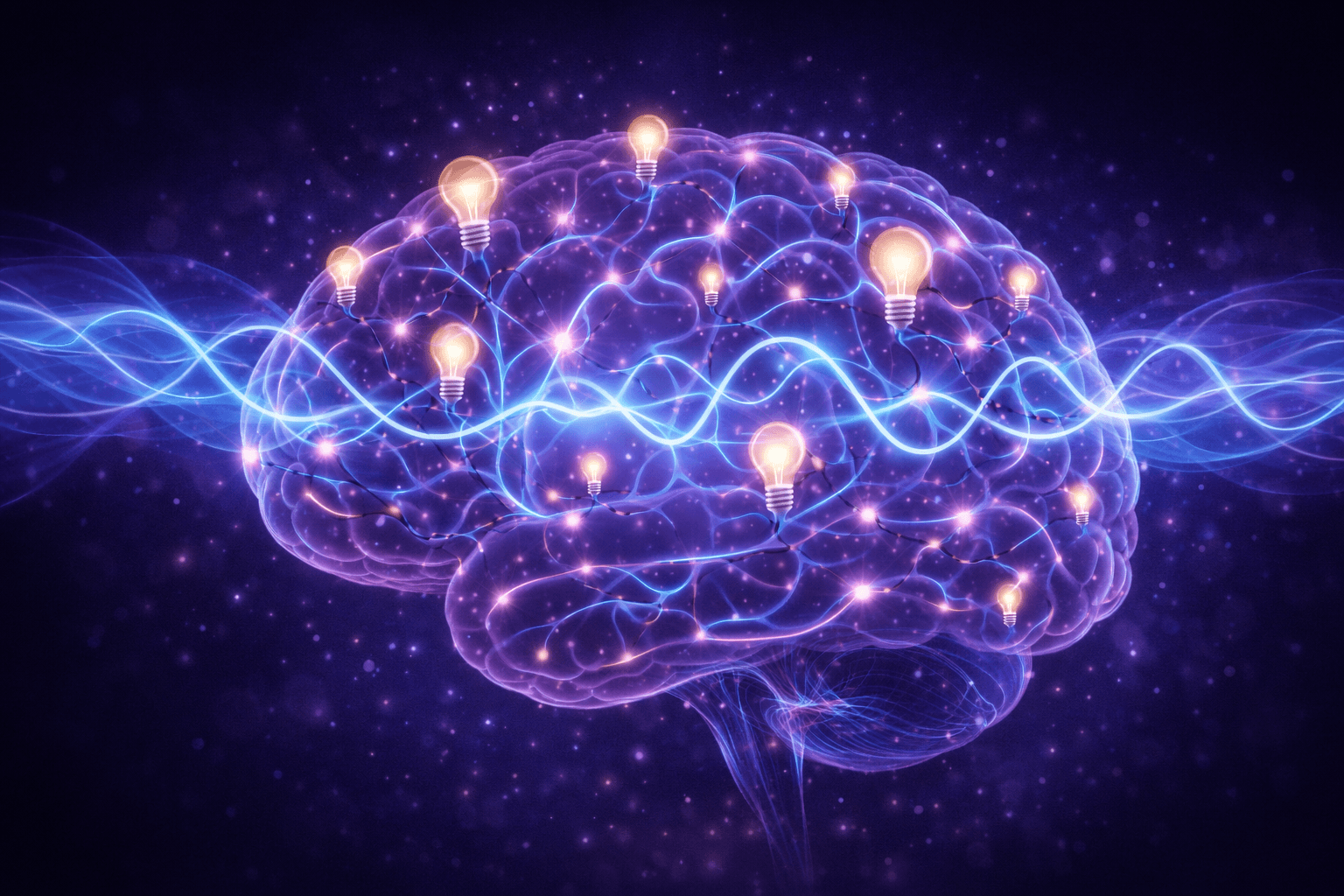
Research has consistently linked Theta activity to enhanced cognitive performance:
Memory consolidation: Studies show Theta waves play a crucial role in transferring information from short-term to long-term memory. This is why you often "sleep on" a problem and wake up with solutions.
Creative insight: Theta states are associated with "aha moments" — those sudden flashes of insight that seem to come from nowhere. Your brain is actually making connections it couldn't in a busy Beta state.
Reduced anxiety: Theta activity has been shown to decrease cortisol levels and reduce the mental chatter that interferes with concentration.
Enhanced learning: When your brain is in Theta, it's more receptive to new information and patterns.
5 Ways to Activate Theta Brain Waves
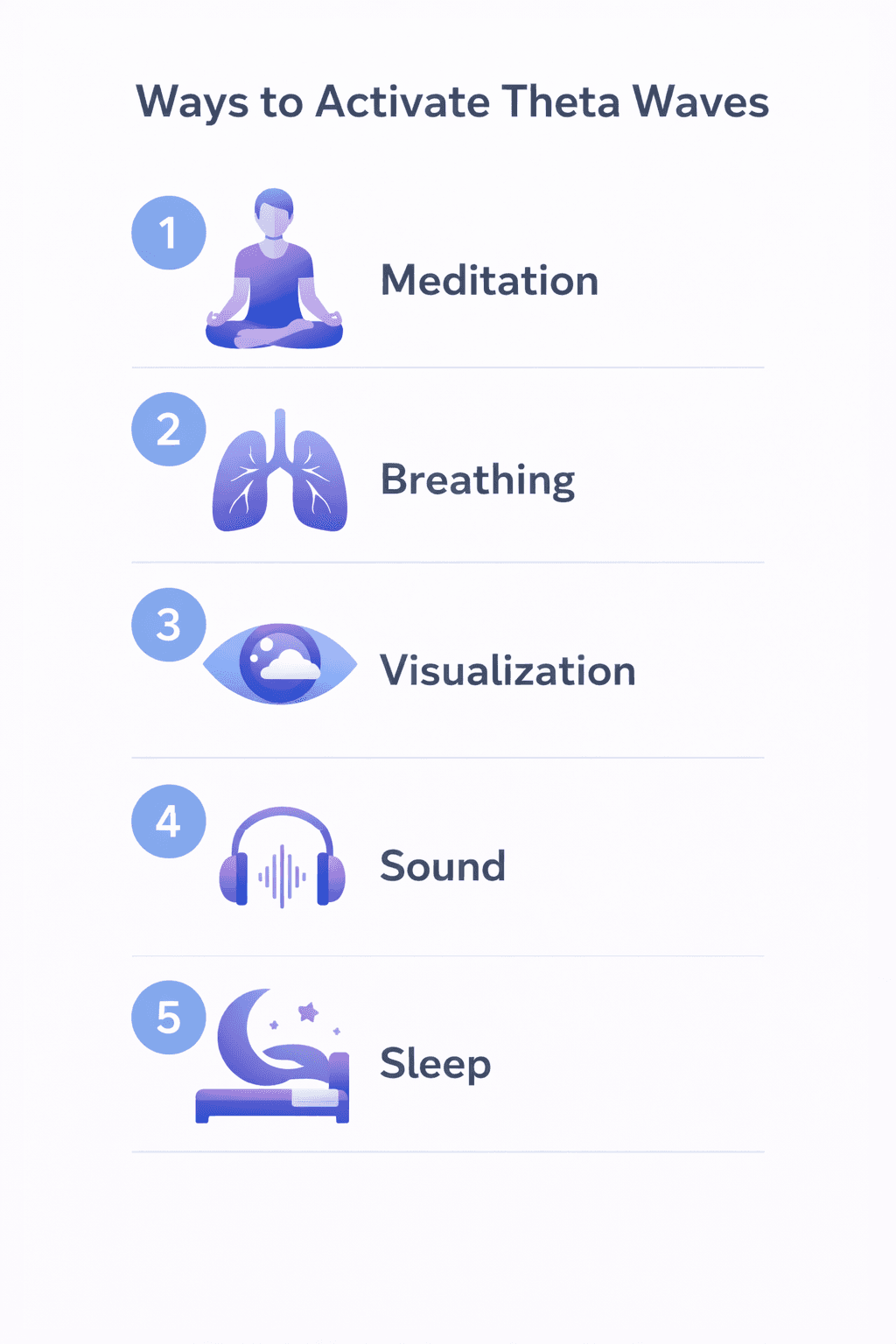
Five proven methods to activate Theta brain waves
1. Meditation (Especially Eyes-Closed)
Traditional meditation naturally induces Theta states after about 10-20 minutes of practice. The key is consistent, daily practice. Even 10 minutes can shift your brainwave patterns.
Simple technique: Close your eyes, focus on your breath, and let thoughts pass without engaging them. When you notice your mind wandering, gently return focus to breathing.
2. Deep Breathing Exercises
Slow, rhythmic breathing activates the parasympathetic nervous system, which promotes Theta activity.
Try this: Breathe in for 4 counts, hold for 4 counts, breathe out for 6 counts. Repeat for 5 minutes.
3. Visualization
Vivid mental imagery naturally shifts your brain toward Theta. Athletes and performers use this technique extensively.
Practice: Close your eyes and imagine a peaceful scene in complete detail — the colors, sounds, textures, and sensations. Spend 5-10 minutes fully immersed.
4. Audio Entrainment
This is where modern neuroscience gets interesting. Your brain has a natural tendency to synchronize with external rhythms — a phenomenon called "entrainment."
Specially designed audio frequencies can guide your brainwaves into Theta states more quickly and reliably than meditation alone. This is particularly helpful for beginners or those who struggle with traditional meditation.
Programs like The Genius Wave use this principle, offering 12-minute audio sessions designed to encourage Theta activity. It's a practical option for those who want results without spending years learning to meditate.

5. Just-Before-Sleep Practice
The transition into sleep naturally takes you through Theta. You can leverage this by:
- Reviewing what you want to learn or solve right before bed
- Setting an intention or question for your subconscious to work on
- Keeping a notebook nearby to capture insights upon waking
Creating Your Daily Theta Practice
The most effective approach combines multiple methods:
Morning (12-15 minutes):
- Wake up and stay in bed with eyes closed for 2-3 minutes (you're naturally in Theta)
- Use an audio entrainment session or meditate
- Visualize your day going well
Throughout the day:
- Take 2-minute breathing breaks when you feel mentally foggy
- Before important tasks, close your eyes and take 5 deep breaths
Evening:
- Review key information you want to retain
- Set an intention for overnight insight
- Avoid screens for 30 minutes before sleep
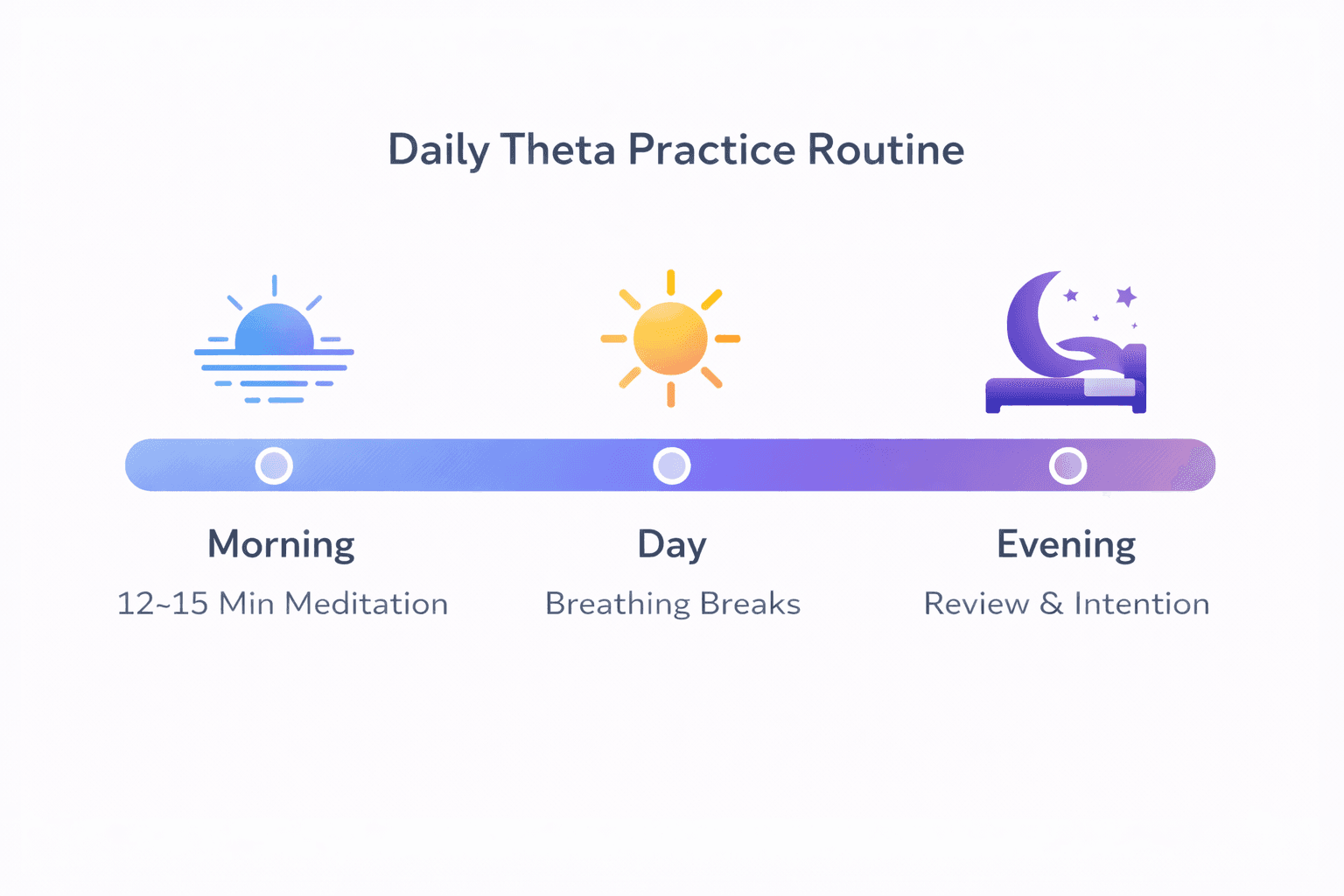
A simple daily routine to maximize Theta wave benefits
What to Expect
Week 1-2: You may not notice dramatic changes, but your brain is building new patterns. You might find yourself slightly calmer or sleeping better.
Week 3-4: Many people report improved focus during work sessions and more creative ideas. Morning grogginess often decreases.
Month 2+: With consistent practice, Theta access becomes more natural. You'll likely notice you can concentrate longer and solve problems more easily.
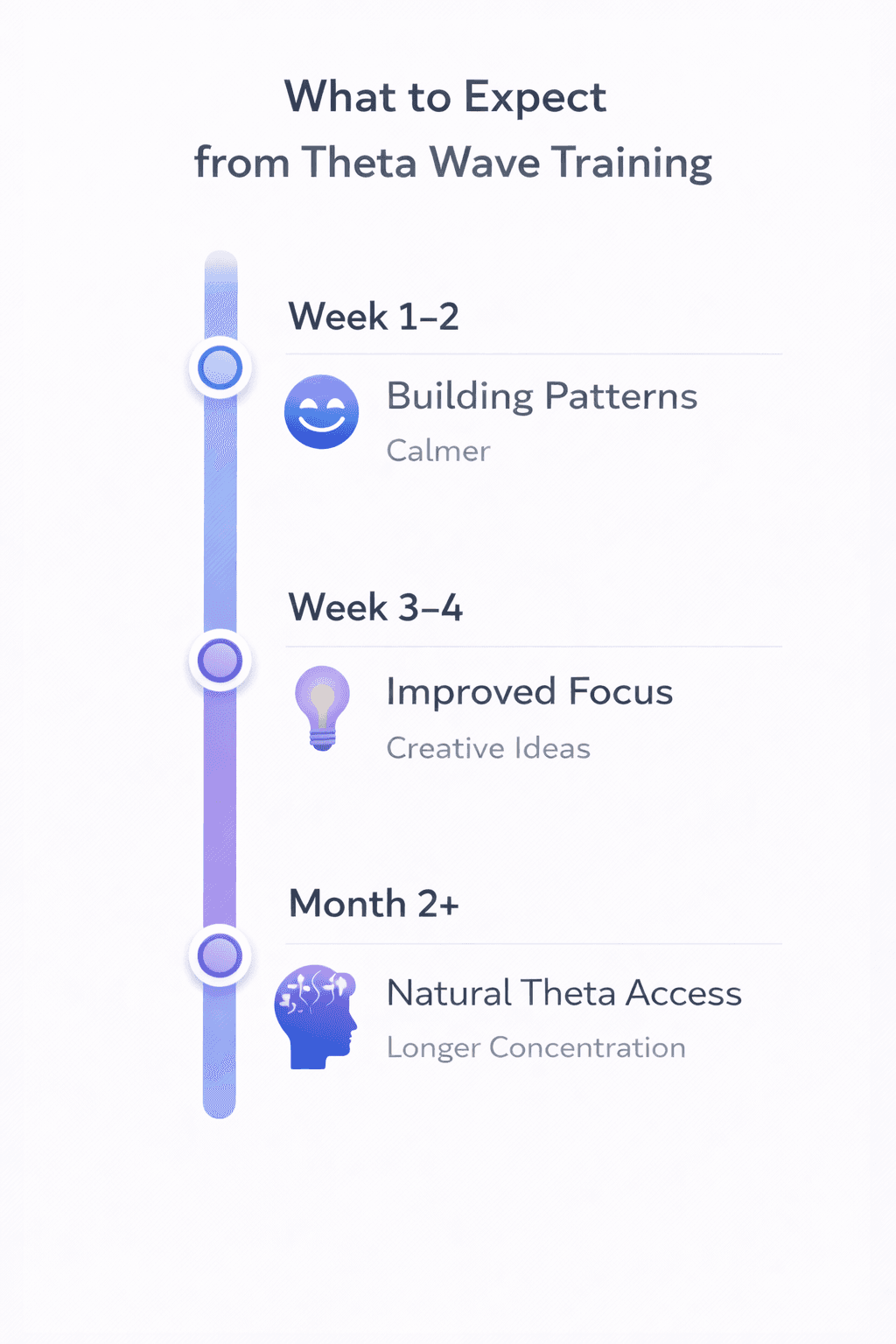
What to expect from consistent Theta wave practice
Common Mistakes
Trying too hard: Theta is a relaxed state. Straining to "achieve" it pushes you into Beta. Let go of expectations.
Inconsistency: Daily practice matters more than duration. Ten minutes every day beats an hour once a week.
Checking your phone first thing: Morning phone use immediately kicks you into Beta. Protect those first few minutes of natural Theta.
Expecting instant results: Brain training is like physical exercise — benefits accumulate over time.
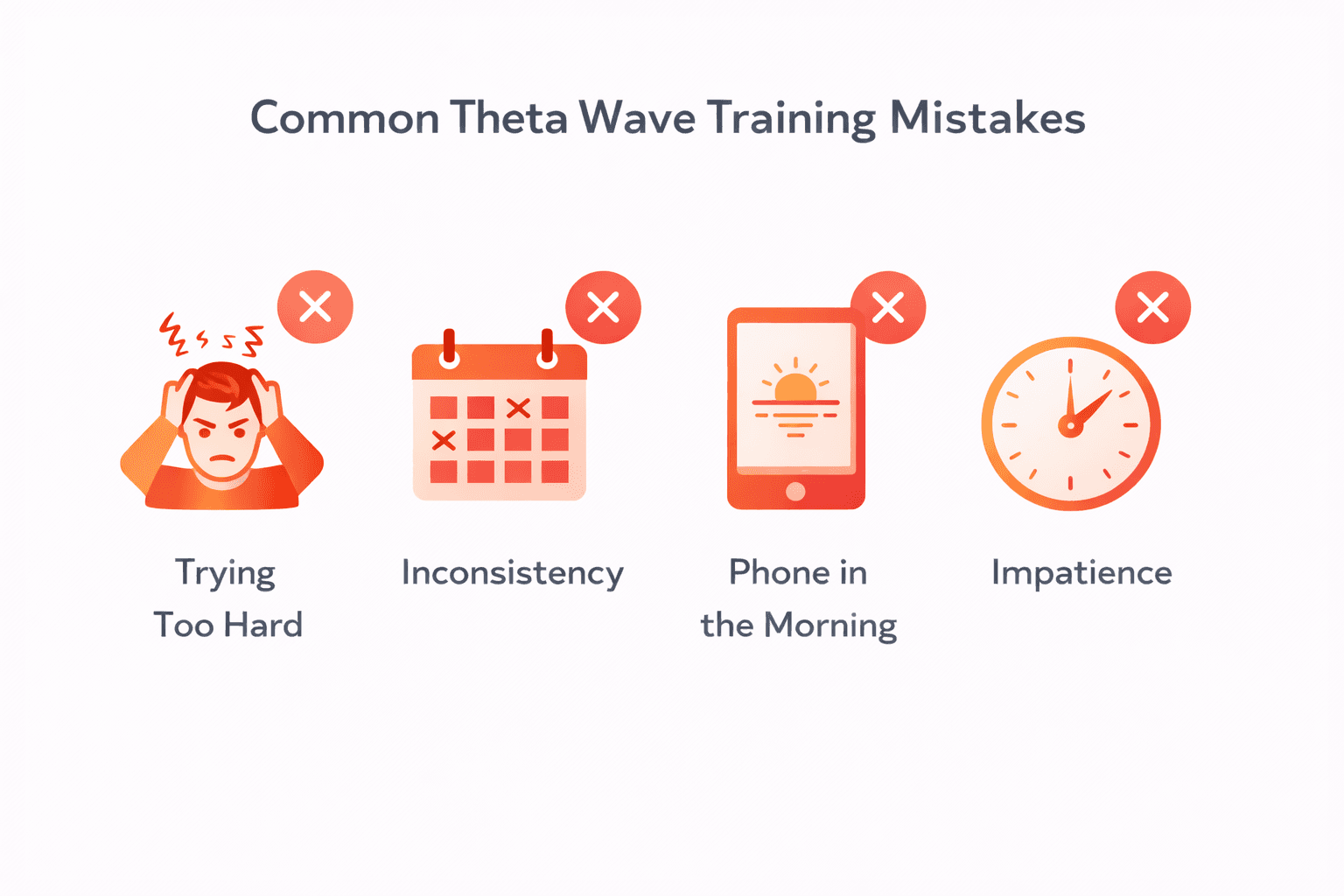
Avoid these common mistakes for better results
Key Takeaways
- Theta waves (4-8 Hz) are linked to creativity, memory, and mental clarity
- Your brain naturally enters Theta during relaxation and the transition to sleep
- Meditation, breathing exercises, visualization, and audio entrainment can all induce Theta
- Consistency matters more than session length
- Results typically become noticeable after 2-4 weeks of daily practice